Foundation repair in Corpus Christi costs $4,000–$15,000 complete, with pilings at $1,200–$3,000 each. Below that sit moisture stabilisation at $500–$2,500 and a plumbing test at $300–$800. Ask whether the assessment is charged.
The five rungs in order, when to stop climbing, and the invoices that belong to other trades.
The ladder, cheapest first
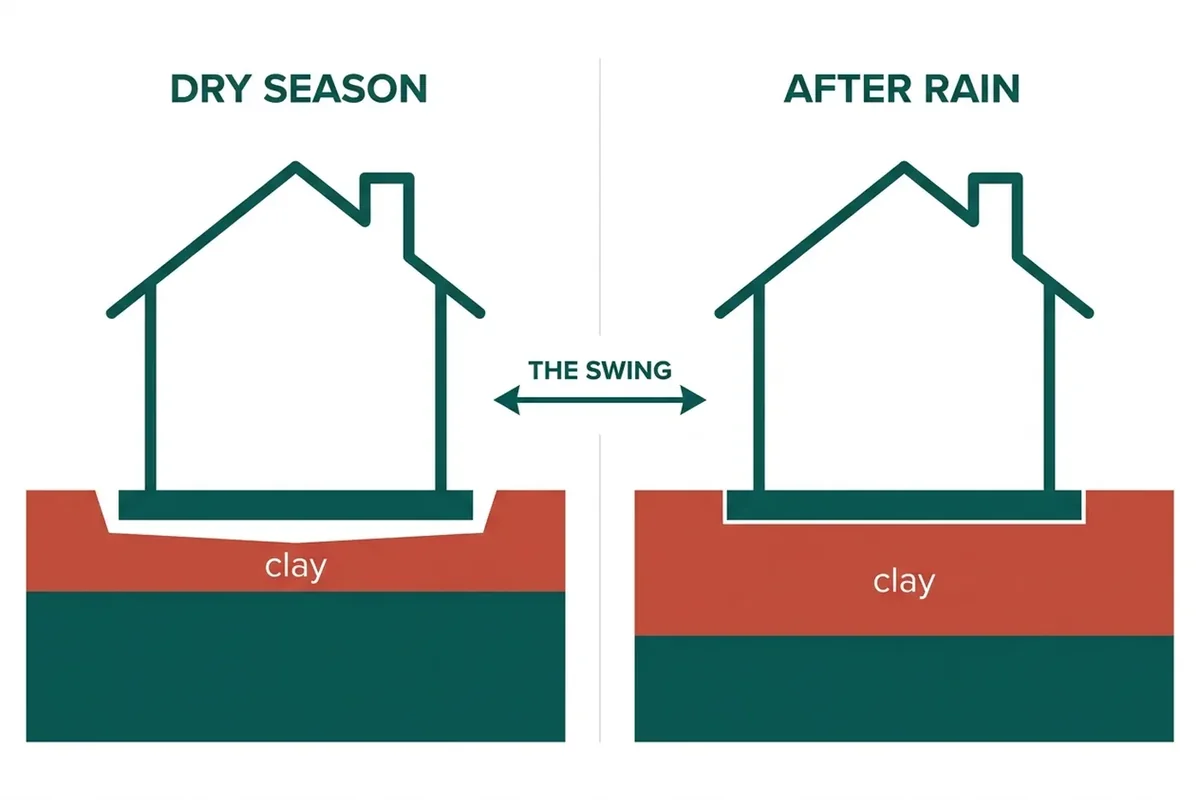
Most cost guides in this trade start with the biggest number. That is backwards on ground where the mechanism is a moisture cycle, because the cycle can often be managed for a fraction of what carrying the house past it costs.
| Rung | What it is | Cost | Stop here if… |
|---|---|---|---|
| 1 | First assessment | Often free; ask | Floor elevations show construction tolerance rather than movement |
| 2 | Static plumbing test | $300–$800 | It fails — then a plumber comes before anybody else |
| 3 | Moisture stabilisation | $500–$2,500 | Movement is seasonal or early and the floor is close to level |
| 4 | Root barrier | $1,500–$6,000 | One elevation is dry because something is drinking there |
| 5 | Pressed pilings | $4,000–$15,000 | The floor has measurably dropped and you want it back |
Rungs two and three are worth their money even when they are not the whole answer, because both are diagnostic. A clear plumbing test rules out an entire category. A season of stable moisture that changes nothing tells you the cause is not the cycle.
Every line, priced
| Work | Range | What moves it |
|---|---|---|
| First assessment | Often free; ask | Ask for floor elevations and a written scope |
| Static plumbing test | $300–$800 | Performed by a plumber, not the foundation contractor |
| Moisture stabilisation | $500–$2,500 | Perimeter length, grading corrections, controls |
| Root barrier | $1,500–$6,000 | Length of run and depth required |
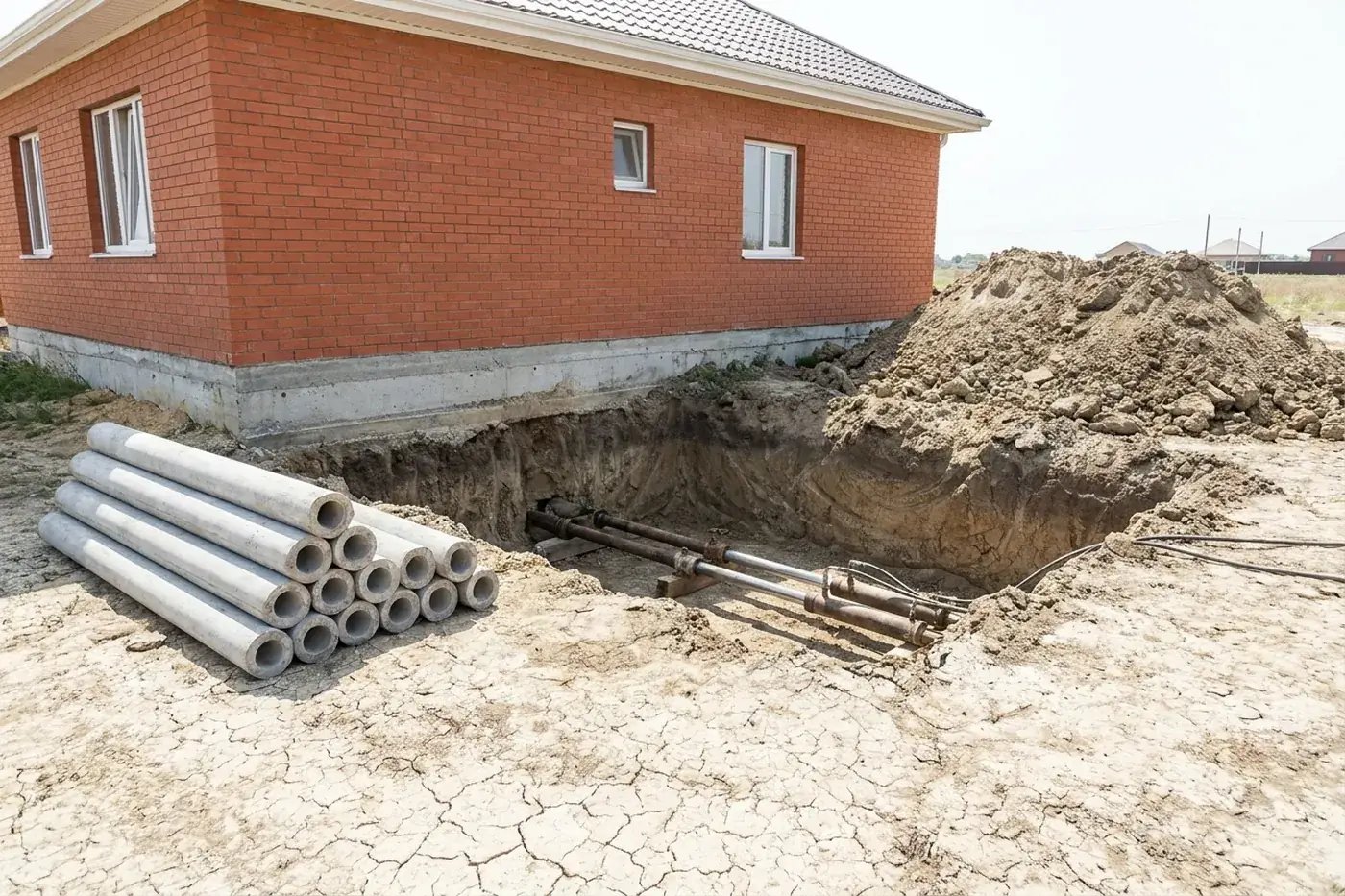
| Pressed pilings | $1,200–$3,000 each | Depth, overwhelmingly. Then access |
| Complete underpinning | $4,000–$15,000 | Count multiplied by that depth |
| Post-tensioned slab work | $3,500–$12,000 | Locating comes first and constrains everything after it |
| Cosmetic crack repair | $400–$1,500 | Last, after anything structural has finished moving |
Why depth is the whole variable on pilings
Bids tend to agree roughly on how many pilings a house needs and to differ by thousands anyway. The gap is nearly always an assumption about how far down each one goes, and that assumption is rarely written anywhere.
So there is one question that makes competing quotes comparable: what depth did you assume, and what does a section cost beyond it? Anyone who has actually looked at your site will answer without pausing.
The invoices that belong to other trades
The plumber. A good foundation specialist recommends the static test and does not perform it, because the party recommending a test should not be the party selling the result. Repair of any line found is their trade entirely.
The engineer. On a substantial job, an independent structural engineer produces a scope that several contractors can bid against on equal terms. It costs money and on a large job it frequently saves more than it costs, particularly in a state with no licensing to fall back on.
The finishing. Crack repair, doors, trim and paint come after the structure has settled into its new position, and they should be a separate line you can hand to somebody else.
What the assessment should tell you
Which rung you are on. That is the entire value of the assessment. A company that only makes money at rung five has an obvious reason to start every conversation there, and the only defence against that is a specialist willing to say the ladder ends lower.

Straight talk about price
What does foundation repair cost in Corpus Christi?
A complete underpinning job runs $4,000-$15,000 with pressed pilings at $1,200-$3,000 each. Below that sit far cheaper options: moisture stabilisation at $500-$2,500, root barriers at $1,500-$6,000, and a static plumbing test at $300-$800. Ask whether the assessment is charged.
Why start with the cheap options?
Because on this ground they are frequently sufficient, and because two of them are diagnostic. A plumbing test that comes back clear removes an entire category of cause. Moisture stabilisation addresses the mechanism directly rather than compensating for it.
Is the cheap option just a delay tactic?
It would be if it were sold to a house that has already dropped. Where the floor is measurably out of level, a good specialist says so and quotes the structural work. The ladder exists because a great many houses are further down it than the owner assumes.
Why do two quotes differ so much?
Usually an unstated depth assumption on the pilings, sometimes a difference in how many the bidder thinks are needed. Ask each one what depth they assumed and what a section costs past it - that single question makes bids comparable.
Does insurance cover any of this?
Shrink-swell movement is normally treated as a maintenance issue and excluded, and it is better to know that than to build a plan around a claim. Something abrupt with a nameable cause sits differently, and only the adjuster gets to rule on it.
Is there a job where the answer is nothing?
Regularly. An older house that moved years ago, found its position, and has been stable since often needs no structural work at all - just a sensible moisture regime. That answer comes from the first assessment, and it is the one worth looking for first.
What is not in these prices?
Plumbing repair, which is a licensed plumber's work and a separate invoice. Engineering, where a job warrants an independent structural engineer. And cosmetic finishing, which comes last and should be a separate line you are free to give to somebody else.
Book a Corpus Christi foundation assessment
Two things help most before the specialist gets there: roughly what year the house went up, and whether the trouble showed up during a dry spell or after heavy rain. On this ground the season it appeared in narrows the cause faster than the size of any crack does. You get a call back from a local specialist who serves Corpus Christi.