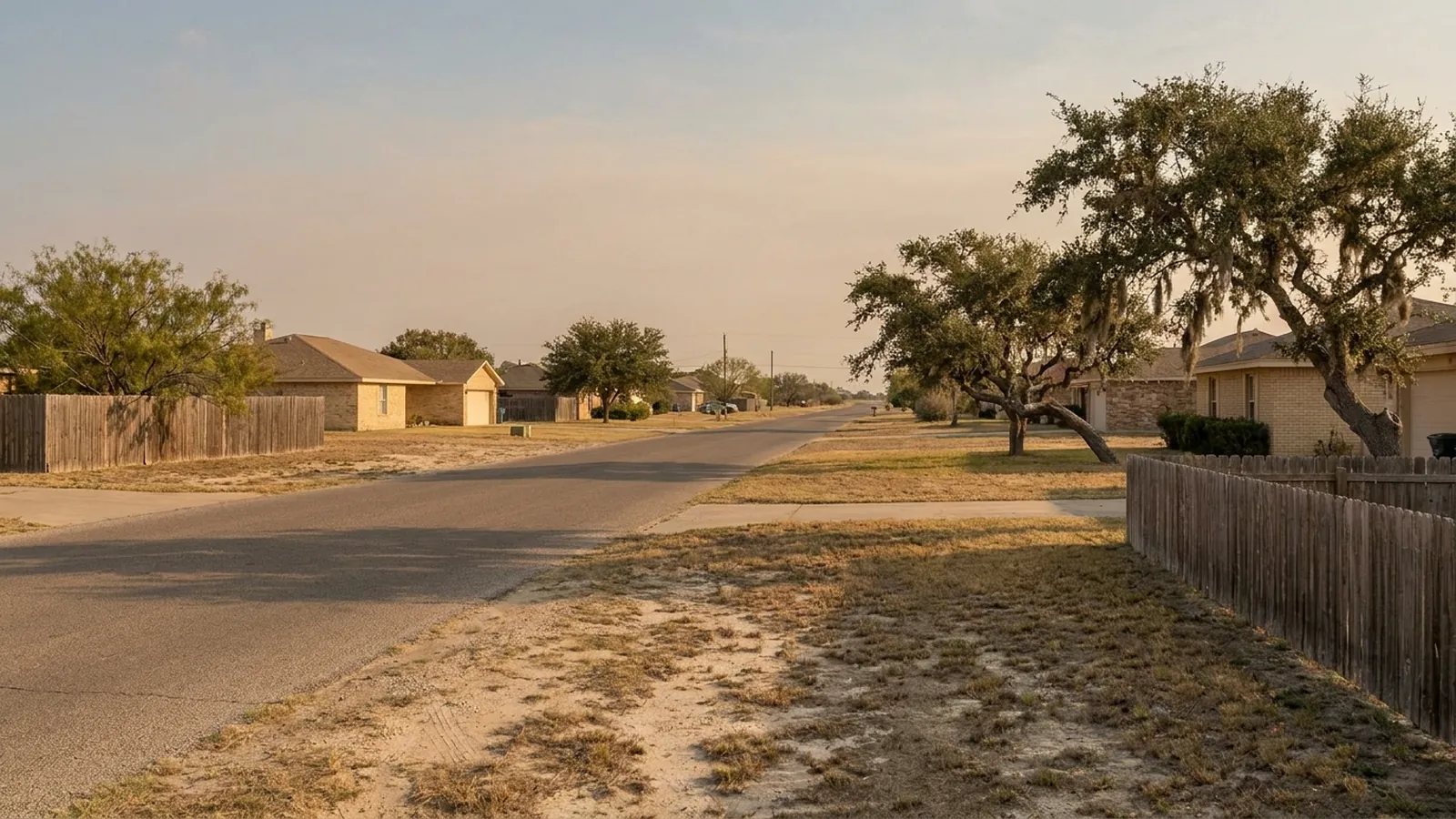
Root barriers for Corpus Christi foundation repair run $1,500–$6,000, against $4,000–$15,000 for underpinning. On clay running 51–61% clay content with only 31.76in of rain, a large tree can dry one elevation on its own. Ask whether the assessment is charged.
Why a tree matters more here than in wetter markets, why removal can backfire, and how the decision is actually made.
Why a tree matters more on 31 inches of rain
In a wet clay market a large tree is drawing from soil that is being topped up regularly. The competition between the tree and the ground under your house is real but it is buffered by supply.
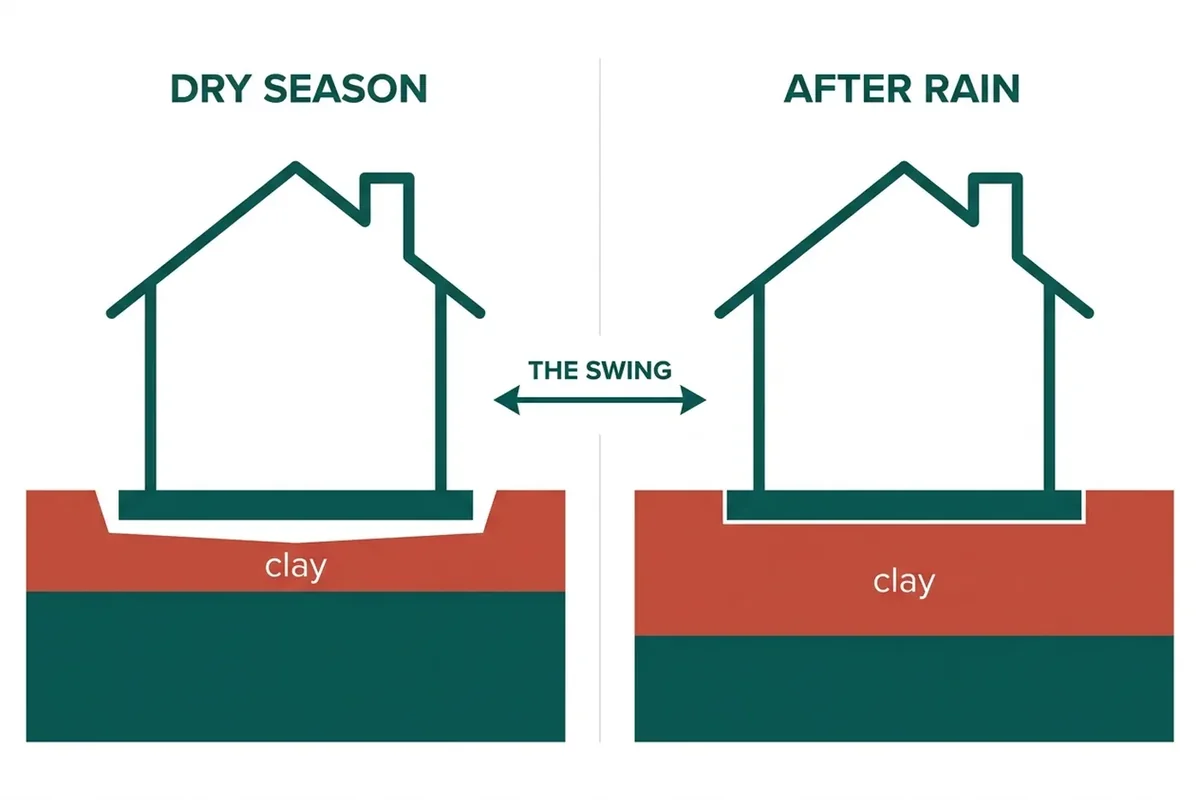
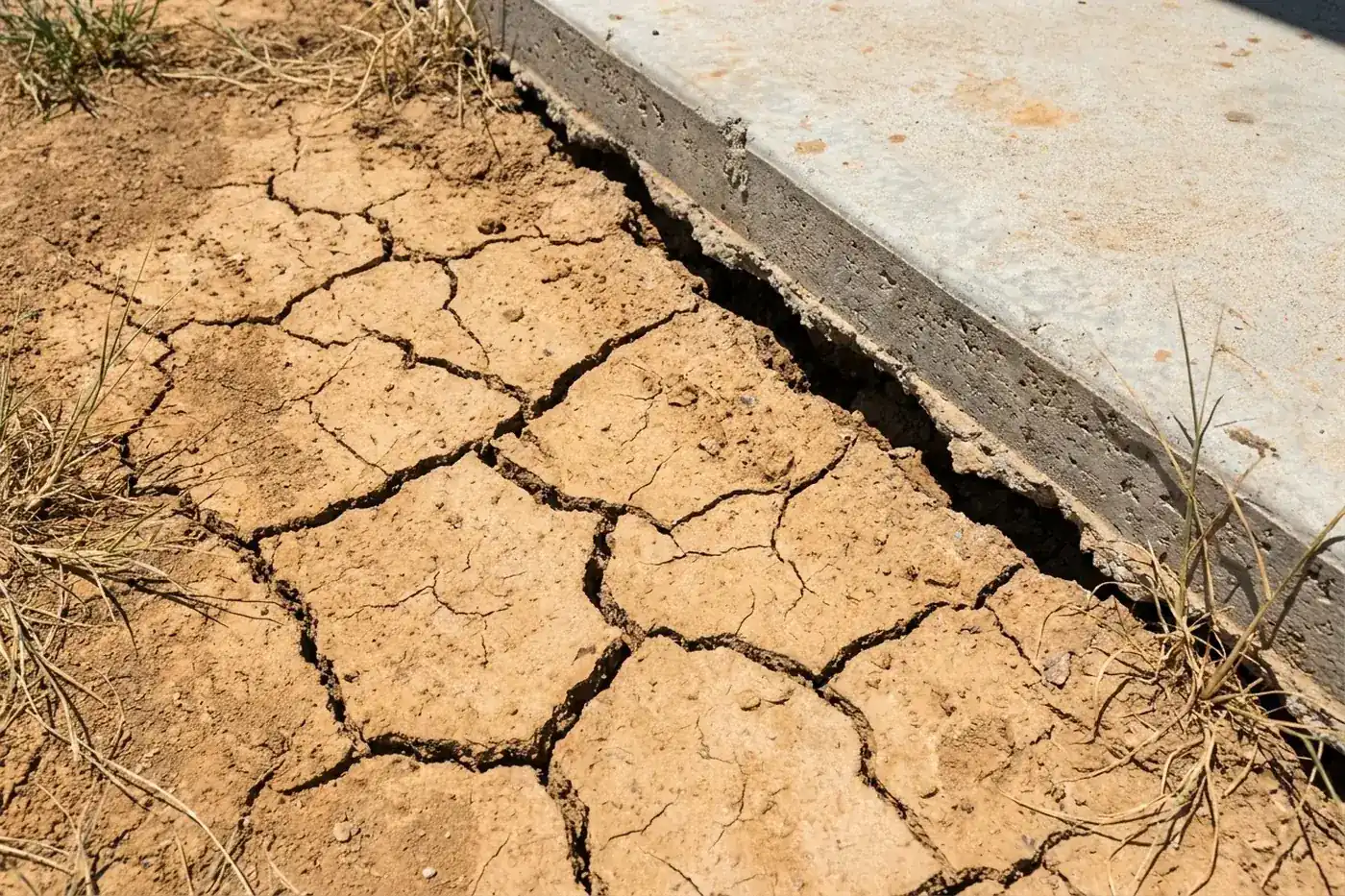
Here there is no buffer for much of the year. January brings 1.54 inches, February 1.93, November 1.97, and the cooling degree day total of 3,523 tells you how hard evaporation is working alongside the tree. During that stretch, moisture the tree takes is moisture that does not get replaced — and clay with a linear extensibility of 18.7 responds to losing it by shrinking.
The result is a house that is drier on one side than the other, which is the specific condition that produces differential movement. Uniform drying is far less damaging than uneven drying, and a tree makes drying uneven by definition.
Why removing the tree can make it worse
This is the counterintuitive part and it is worth understanding before anyone reaches for a chainsaw.
A tree that has been drawing moisture from one elevation for twenty years has left that soil at a persistently lower moisture content, and the house has settled into that shape. Remove the tree and the soil begins re-wetting toward its natural state — which means swelling, over months to years, under the part of the house that had dropped.
Heave after tree removal is a recognised outcome and it can be harder to deal with than the original settlement. A barrier is generally the more controlled intervention, because it changes where roots go without abruptly changing the moisture balance of the whole elevation.
How the foundation repair decision gets made
| Input | What it tells you |
|---|---|
| Floor elevations across the footprint | Whether the elevation nearest the tree actually reads low |
| Which side the tree is on, and how far | Whether the pattern is consistent with root drawdown at all |
| Species and maturity | How much water is realistically in play |
| Season the damage appeared | Drought-phase movement supports the tree hypothesis; wet-phase does not |
| Whether anything else is drying that side | A neighbouring slab, a driveway, a hot exposure |
The first row does most of the work. Where the survey shows the tree side is not low, the tree is probably not your problem however alarming it looks from the window.
What a barrier is
A trench between the tree and the structure, with an impermeable membrane set vertically to redirect roots downward and outward instead of under the slab. Depth and length come from the tree and the geometry, not from a standard detail.
It pairs naturally with moisture stabilisation, because once the tree stops taking from beneath the house, an even watering regime can actually hold an even moisture content. Trying to water against a mature tree is a losing arrangement.
Root barriers, answered plainly
What does a root barrier cost in Corpus Christi?
Usually $1,500-$6,000 depending on the length of the run and how deep it goes. Against $4,000-$15,000 for underpinning, it is one of the cheaper interventions available on this ground, and on the right house it is decisive.
How much water does a tree actually take?
A mature tree in a South Texas August transpires a substantial volume every day, and it takes it from wherever the moisture is. During a rainfall deficit that is the soil under and around your foundation, on the side the tree is on.
Should I just remove the tree?
Usually not, and sometimes it makes things worse. Removing a large tree that has been drying one side of a house for decades allows that soil to re-wet and swell, which can heave the very area that had dropped. A barrier is generally the more controlled option.
How close is too close?
There is no single number that fits every tree and soil, and anybody quoting one confidently is simplifying. What matters is species, size, and whether the elevation nearest the tree reads differently from the rest of the house on a floor survey.
Does a barrier stop the tree taking water?
It redirects roots downward and outward rather than under the foundation. The tree keeps drinking - it just stops drinking from directly beneath your slab, which is the part that was moving your house.
Will it harm the tree?
Done properly, generally not, though it is a real consideration and worth discussing before the trench goes in. Where a tree is significant enough for that to be the deciding factor, an arborist is the right person to ask rather than a foundation contractor.
Book a Corpus Christi foundation assessment
Two things help most before the specialist gets there: roughly what year the house went up, and whether the trouble showed up during a dry spell or after heavy rain. On this ground the season it appeared in narrows the cause faster than the size of any crack does. You get a call back from a local specialist who serves Corpus Christi.