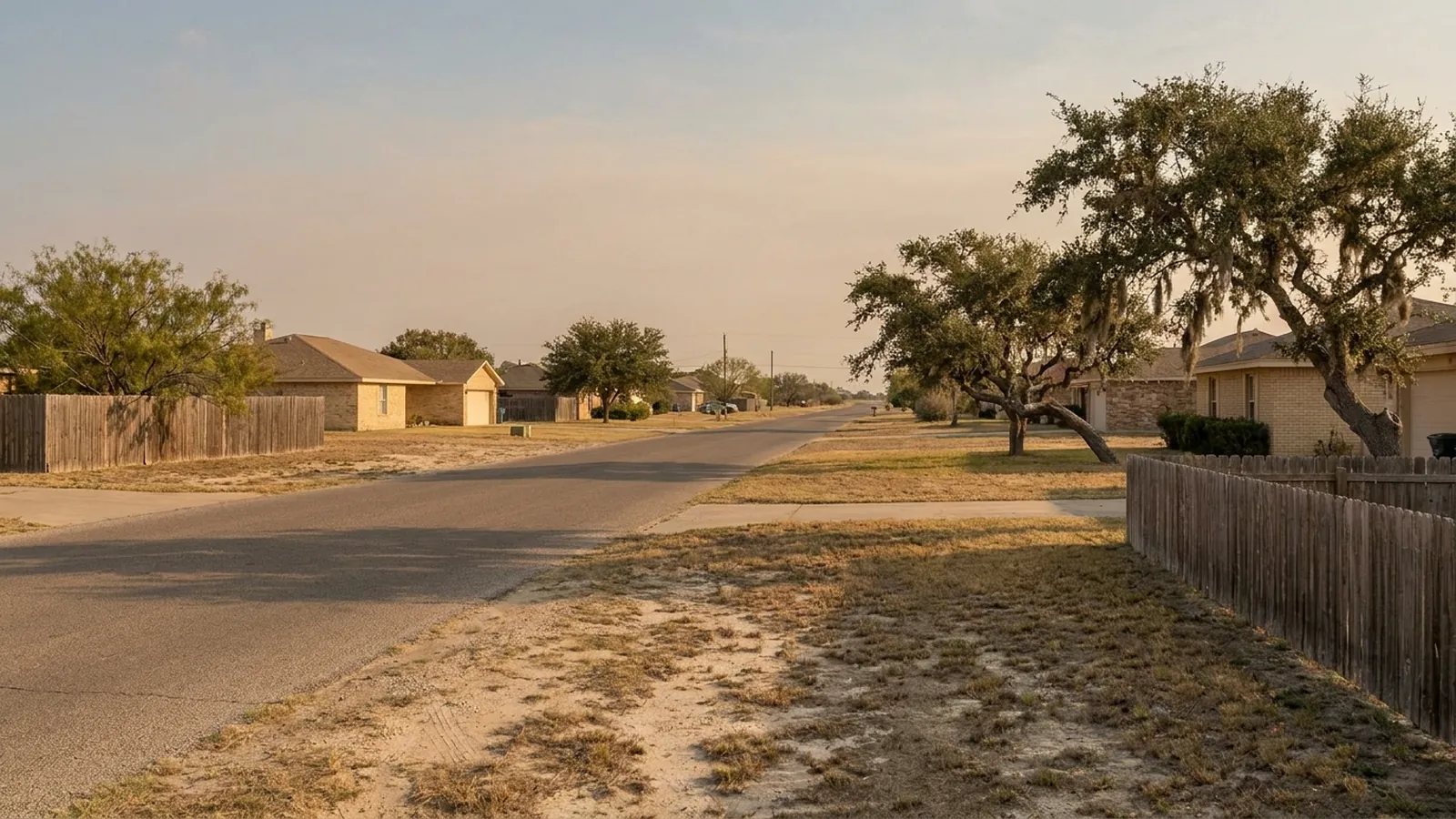
A good Corpus Christi foundation assessment takes 45–90 minutes and should produce floor elevations plus a written scope. Three causes should be ruled out first — plumbing, trees and drainage — because each one defeats a structural repair.
What the three are, what the survey records, and what you keep at the end.
The three to rule out first
| Cause | Why it comes first | How to spot it |
|---|---|---|
| An under-slab leak | Wet clay swells. Underpinning against a force nobody has turned off buys movement that resumes | Localised, non-seasonal, often mid-slab near a wet room. Confirmed by a static test |
| A tree drawing on one elevation | No watering regime beats a mature tree in August, so stabilisation fails while the tree wins | One elevation reads low, and it is the side the tree is on. Addressed with a barrier |
| Drainage concentrating water | Roof water at one corner makes that corner behave completely differently from the rest of the house | The exterior walk, and grade that runs the wrong way |
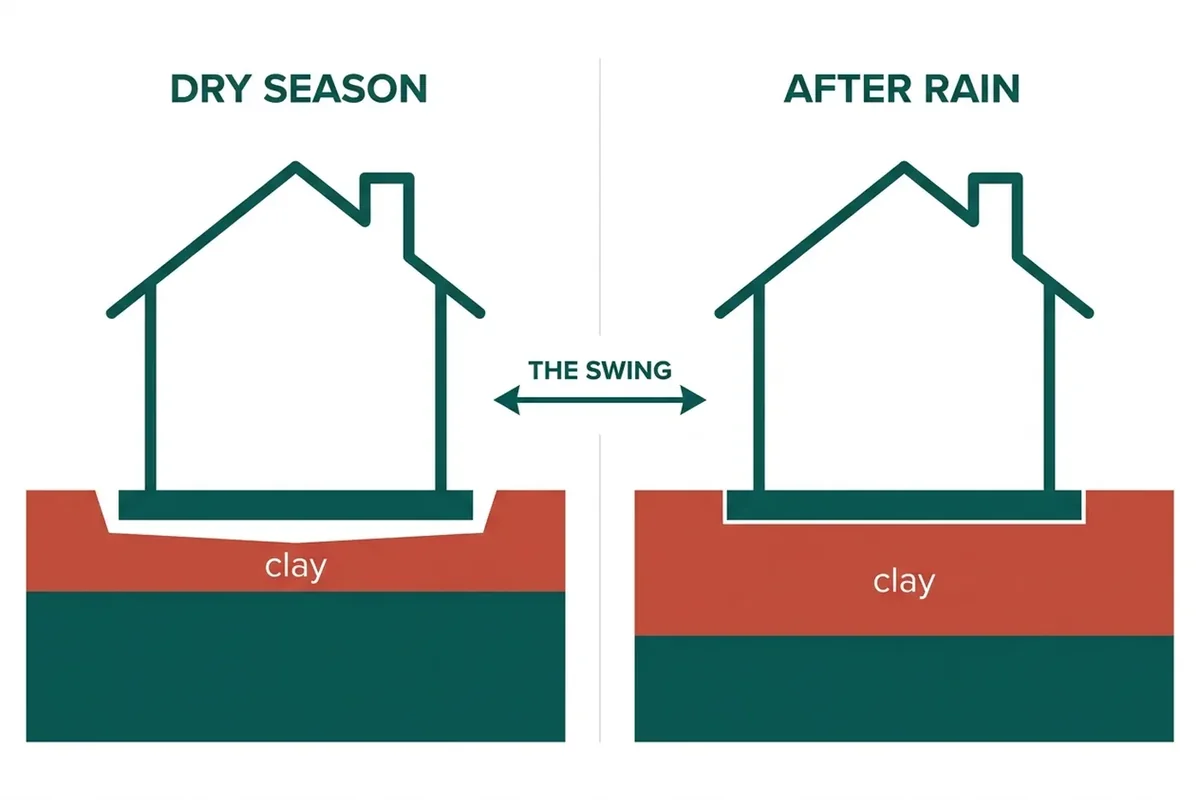
All three produce uneven conditions, and uneven is what damages a structure. The seasonal cycle this region runs on is at least broadly even, which is why it is survivable and why narrowing it works.
What the survey records
- Floor heights taken at points right across the plan, relative to one another, recorded on paper
- The pattern they form — a consistent fall, or scattered highs and lows that were built in
- Slab construction: conventional or post-tensioned, because it constrains everything after
- Exterior grade, downspouts, irrigation, and what is growing where
- Which season the damage appeared in, from what you can tell the specialist
Where foundation repair fits into the visit
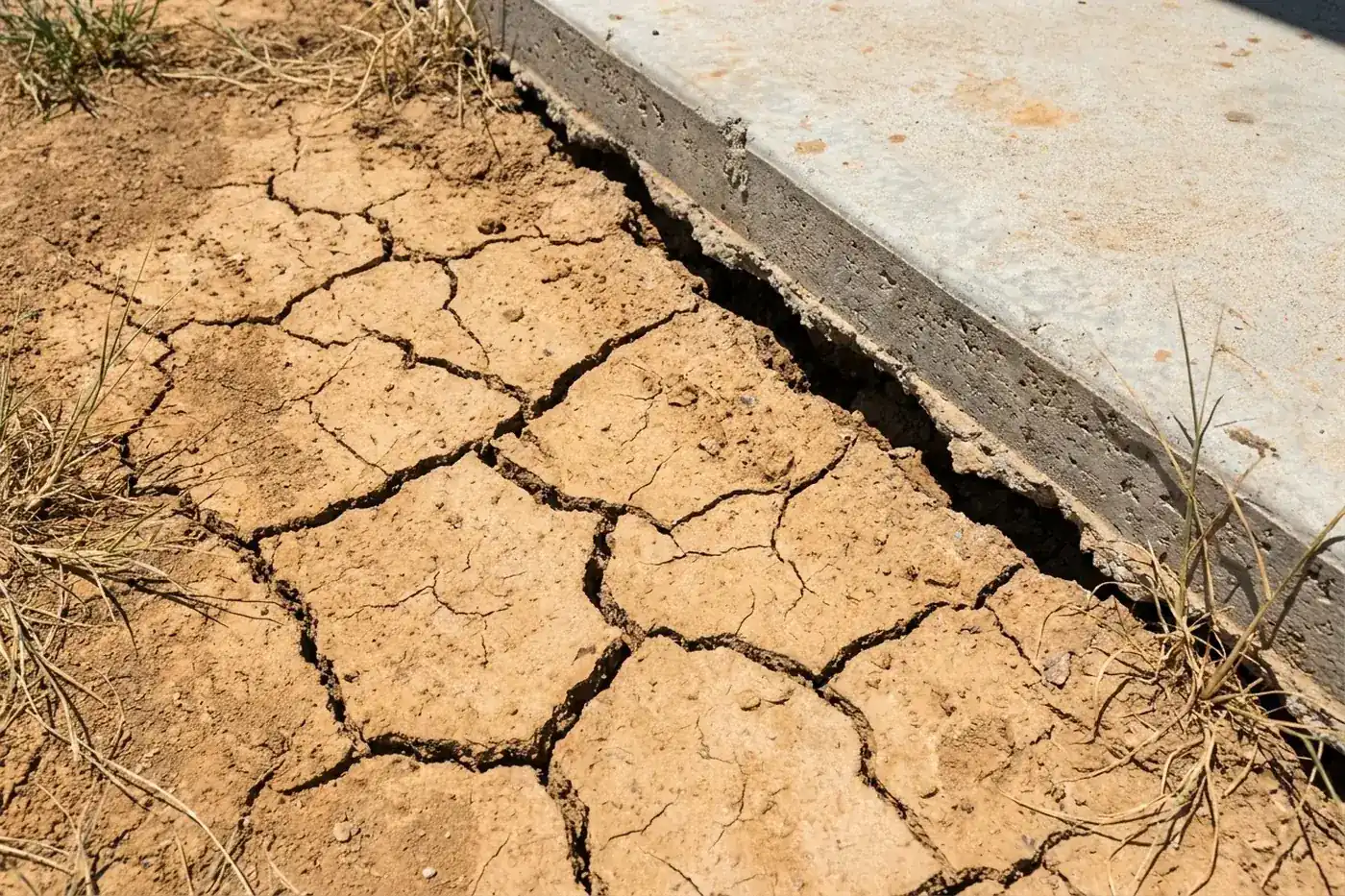
At the end, and only if the measurements justify it. The survey establishes what the floor is doing; the exterior walk establishes what is acting on it; the three exclusions above remove the causes a structural repair cannot fix. Whatever survives that is what should get quoted.
A fair number of houses here need a scope with no structural line in it at all, and that is a finished piece of work rather than an unsuccessful sales call.
Condition, not trend
Worth being straight about the limit. A single visit establishes what your floor is doing today. It does not establish whether that is changing, because change is only visible across two measurements separated by time.
On a slow seasonal mechanism that distinction matters, and on a purchase timeline it usually cannot be resolved. So for a transaction, expect a report of condition and a plain statement that trend is a different question, which is also why an independent engineer is worth considering on anything substantial.
What you should keep
- The elevation figures, with the measurement points identified
- A written scope naming the rung of the ladder and what it would cost
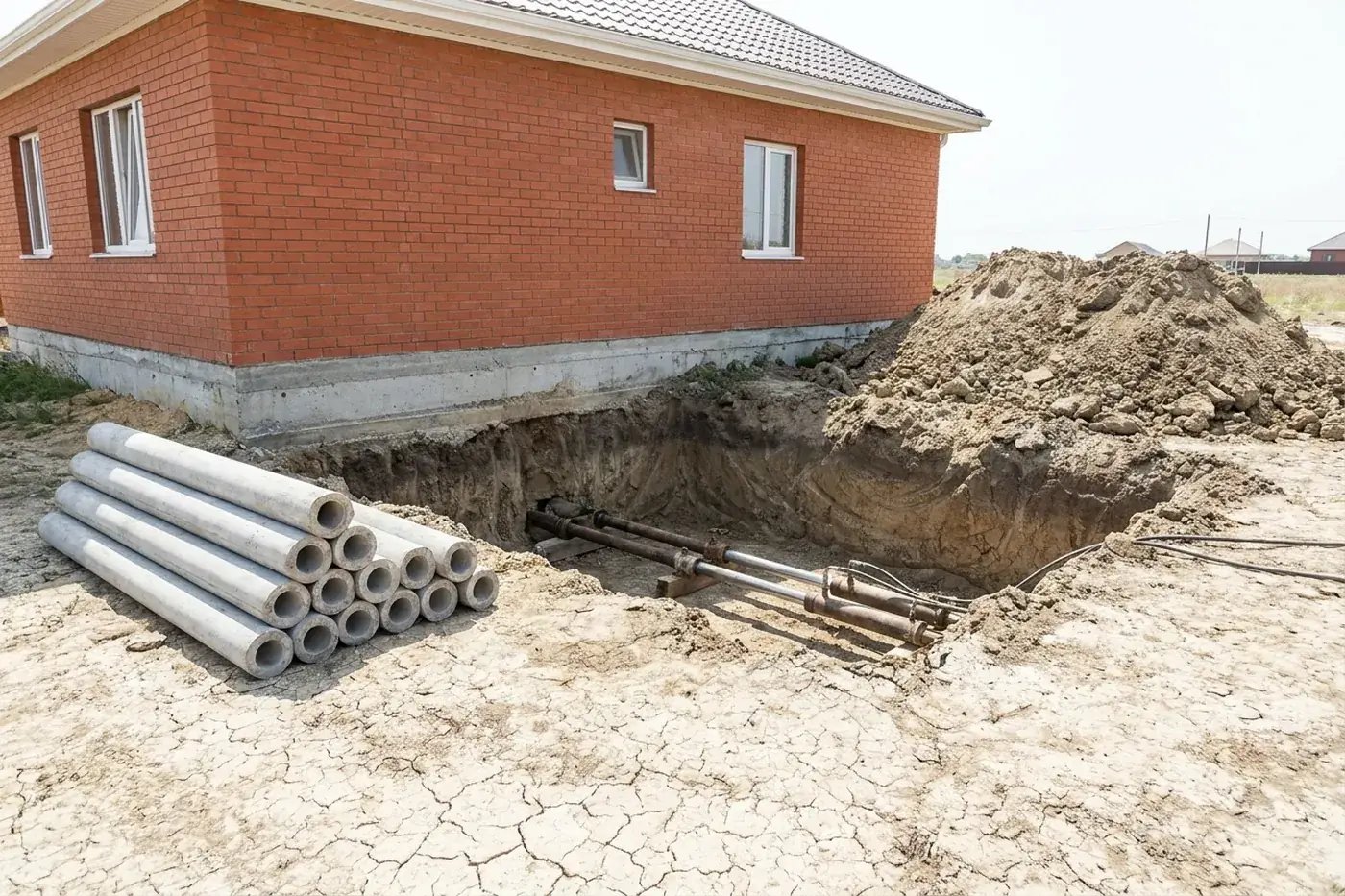
- An assumed piling depth and a rate beyond it, where pilings are proposed
- A plain statement where the answer is a moisture regime rather than structural work
- A reading of any competing bid, including the assumption it did not print
Ask to keep all of it regardless of whether you hire the specialist. See what each rung costs or how to check whoever you hire.
Straight answers about the assessment
What happens during the assessment?
A good assessment covers floor elevations across the whole footprint, an exterior walk covering drainage and vegetation, and whether the slab is conventional or post-tensioned. Ask for a written scope afterwards. Expect 45 to 90 minutes. Ask whether the first assessment is charged.
Why rule things out before quoting?
Because three common causes here are not seasonal clay movement, and each of them defeats a structural repair if it is left running. Quoting pilings over an unresolved leak sells work that will not hold.
Is the first visit free?
Many local specialists don't charge for the first visit, but it depends on the company. Ask when the specialist calls, before they come out. Ask for the elevation survey and a written scope, and for the specialist to go through any competing bid with you. A contractor is paid for repairs performed, and on this ground a fair number of houses need no repair at all.
Will I be told if I need nothing?
A good specialist will say so, and it is the outcome worth looking for first. An older house that moved years ago and has been stable since usually needs a sensible moisture regime and nothing else. Ask for that in writing.
What if I already have a quote from somebody?
Bring it out. One question decides most of the difference between bids here - what piling depth was assumed and what a section costs past it. Ask the specialist to find both in the document, and you are free to take that back to the first company.
Do I need to be home?
For the beginning and the end at least. Much of the useful information is what you have noticed across seasons, and the questions people ask once they see the elevation figures tend to be the good ones.
Book a Corpus Christi foundation assessment
Two things help most before the specialist gets there: roughly what year the house went up, and whether the trouble showed up during a dry spell or after heavy rain. On this ground the season it appeared in narrows the cause faster than the size of any crack does. You get a call back from a local specialist who serves Corpus Christi.