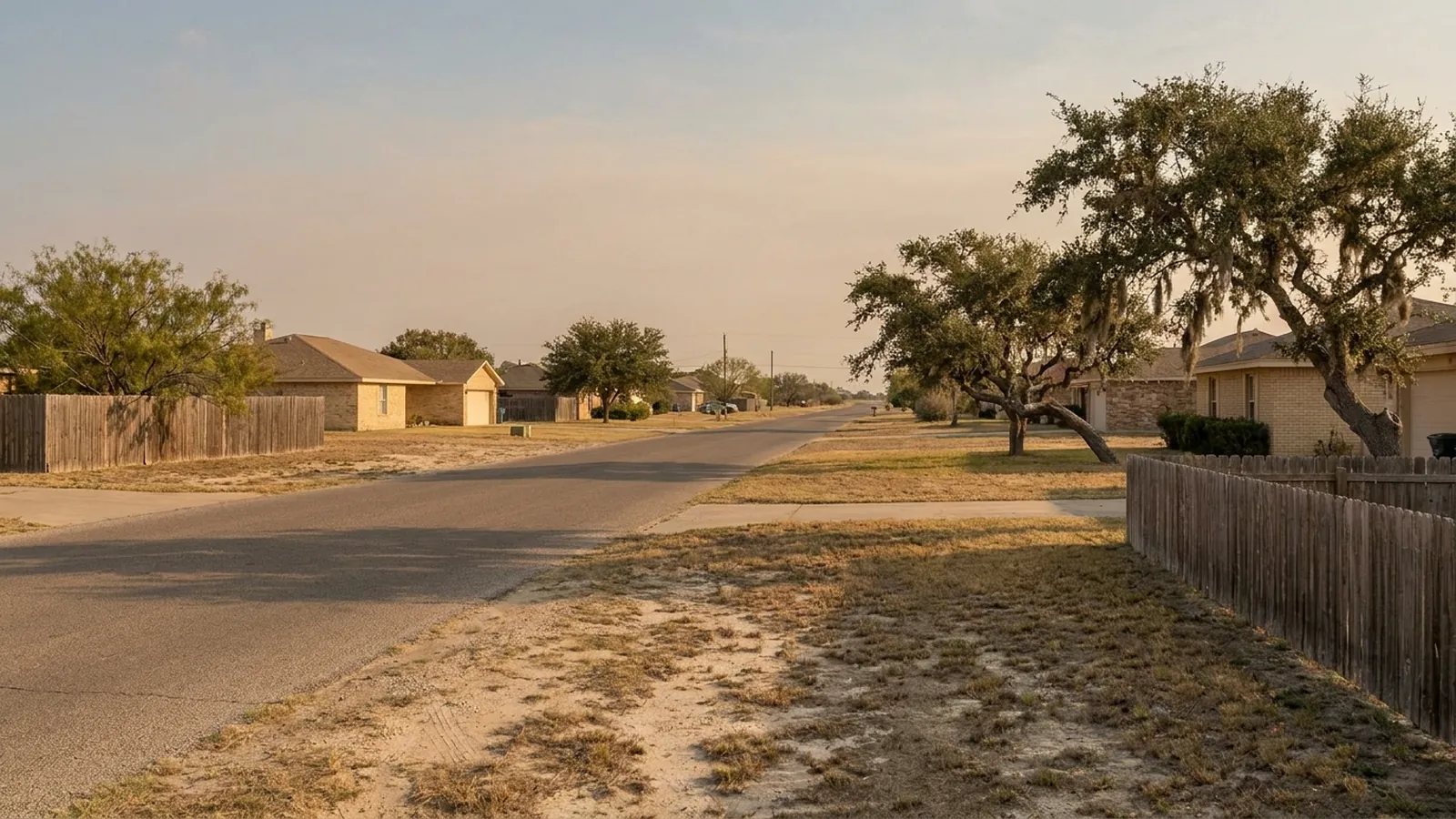
Moisture stabilisation for Corpus Christi foundation repair runs $500–$2,500, against $4,000–$15,000 for underpinning. Local clay carries 51–61% clay content on only 31.76in of rain a year, so the swing is the problem. Ask whether the assessment is charged.
Why the dry season does the damage, what steady moisture actually means, and when this is not the answer.
Same clay as the Gulf South, half the water
The soil survey settles the first half of this. Across Nueces County the USDA maps Victoria clay as a Vertisol — the soil order defined by shrinking and swelling — carrying 51 to 61 percent clay with a linear extensibility up to 18.7 percent. Monteola clay runs 47 to 50 percent with an extensibility of 17.
Those are severe numbers, and they are not unusual for the region. East Baton Rouge Parish’s worst clay, Sharkey, measures 19.8. The soils are comparable. The rainfall is not.
| Market | Worst clay, linear extensibility | Annual rainfall | Cooling degree days |
|---|---|---|---|
| Corpus Christi | 18.7 (Victoria) | 31.76 in | 3,523 |
| Baton Rouge, LA | 19.8 (Sharkey) | 60.65 in | 2,825 |
| Hattiesburg, MS | — | 59.17 in | 2,404 |
Half the water, and several hundred more cooling degree days pulling what does fall back out of the ground. That is the entire local problem in one line.
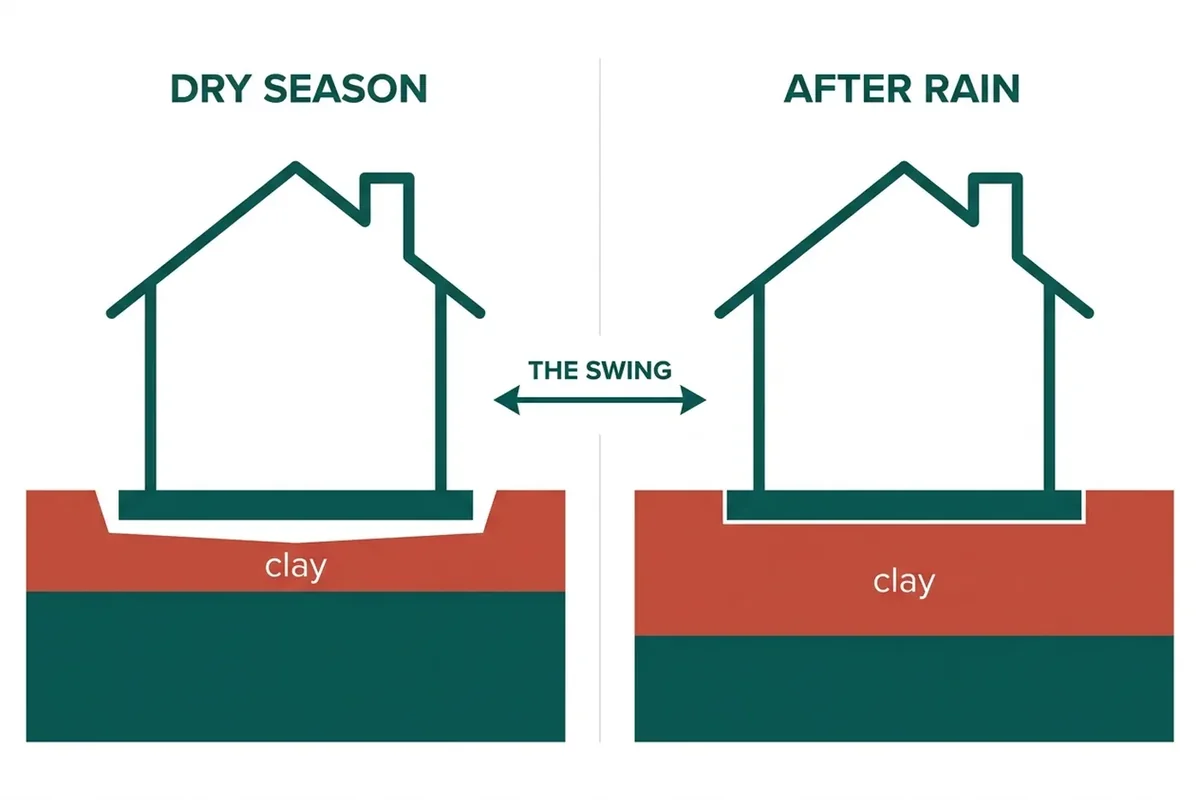
The dry season is the damaging one
This surprises people who have owned a house in a wetter clay market. There the story is usually about water arriving. Here it is about water leaving.
Through a long hot deficit the clay gives up volume and pulls back from the edges of the foundation, worst where evaporation is strongest and where anything is drinking. Then the rain lands — September brings 4.98 inches against January’s 1.54 — and it swells again, hard and unevenly. The house is being worked from underneath twice a year in opposite directions.
Which means the useful question is not how bad the clay is. It is how far it swings, and that is something you can change.
What stabilisation actually is
| Element | What it does |
|---|---|
| Perimeter soaker or drip line, set back from the slab | Delivers water slowly and evenly rather than in bursts |
| A timer, run on a schedule you keep in winter too | Consistency is the point; a summer-only regime creates the swing it was meant to stop |
| Grading corrections where water pools or runs off fast | Stops one elevation being much wetter or drier than the rest |
| Downspout extensions away from the corners | Roof water at one corner is the fastest way to make a house move unevenly |
| Root barriers where a tree is competing | Nothing you do with a hose beats a mature tree in August |
The aim is steady, not wet. Saturated ground against a slab softens bearing soil and can push water toward plumbing you cannot inspect, which trades one problem for a worse one.
When this is not enough
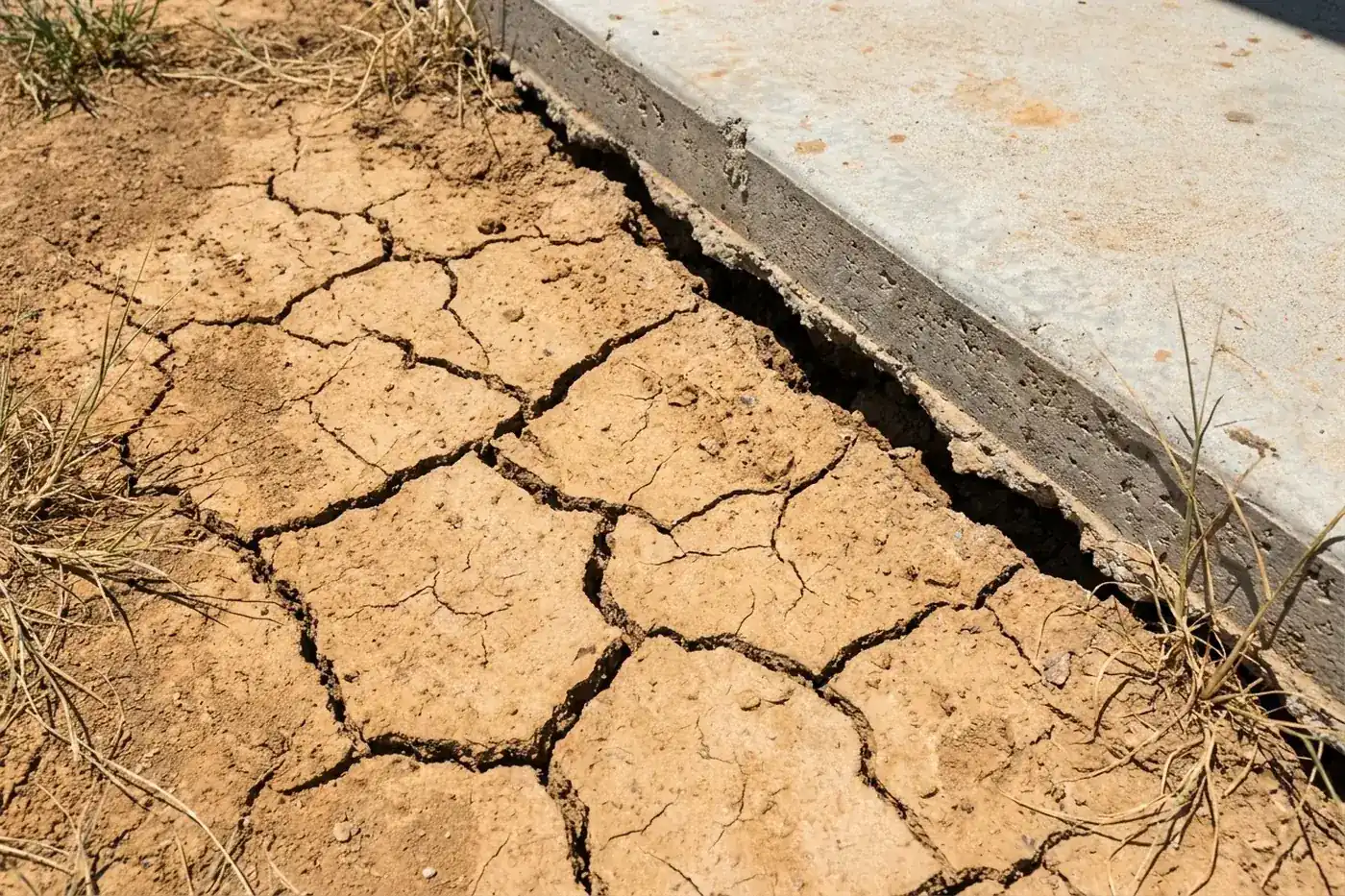
Where the floor has already gone measurably out of level, moisture management holds the position you are in rather than recovering the one you had. That is worth knowing before you buy it. Recovering elevation means pilings, and a good specialist will say so plainly rather than sell a cheaper thing that cannot do the job.
It is also defeated by anything local: a leak under the slab, a tree on one elevation, or drainage that concentrates. Those should be found first, because an even watering regime cannot outrun an uneven cause.
Moisture and clay, answered plainly
How much does foundation repair cost in Corpus Christi?
A complete underpinning job is $4,000-$15,000, with pressed pilings at $1,200-$3,000 each. Moisture stabilisation is far cheaper at $500-$2,500, and on a house that has not yet moved much it is often the only thing needed. Ask whether the assessment is charged.
Why would watering the ground fix a foundation?
Because the damage comes from change rather than from dryness itself. Clay that stays at a steady moisture content holds its volume and holds your house. Clay that dries hard for eight months and then swells in September moves, and it takes the slab with it.
Is this just a cheaper alternative to real repair?
It is a different repair aimed at the cause rather than the symptom. Where a house has already dropped, stabilising moisture will not lift it back, and a good specialist will say so. Where movement is early or seasonal, it addresses the thing that is actually doing the damage.
How wet should the soil be?
Steady, not wet. The goal is a consistent moisture content year-round, not saturation. Overwatering next to a slab creates its own problems, including softening bearing soil and pushing water toward under-slab plumbing you cannot see.
When does it not work?
When something else is driving the moisture. A leaking supply line under the slab, a large tree drawing hard on one elevation, or drainage that dumps roof water at one corner will all defeat an even watering regime, because they are all local and it is not.
Does Corpus Christi really have a drought problem?
The rainfall normal is 31.76 inches a year against Baton Rouge's 60.65, on clay of comparable shrink-swell potential, with 3,523 cooling degree days driving evaporation. The soil is not unusual for the Gulf South. The water budget is.
Book a Corpus Christi foundation assessment
Two things help most before the specialist gets there: roughly what year the house went up, and whether the trouble showed up during a dry spell or after heavy rain. On this ground the season it appeared in narrows the cause faster than the size of any crack does. You get a call back from a local specialist who serves Corpus Christi.