Post-tensioned slab foundation repair in Corpus Christi runs $3,500–$12,000, with tendon locating first. The strands are steel under high tension — cutting or coring without locating them can sever one. Ask whether the assessment is charged.
How to tell what you have, what changes about the repair, and where a contractor’s work stops and an engineer’s begins.
What a post-tensioned slab is
A concrete slab reinforced with steel strands that are tensioned after the concrete has cured, so the slab is held in compression. It is common in Texas residential construction and it exists precisely because of ground like this: a slab in compression resists cracking far better when the soil underneath it changes shape.
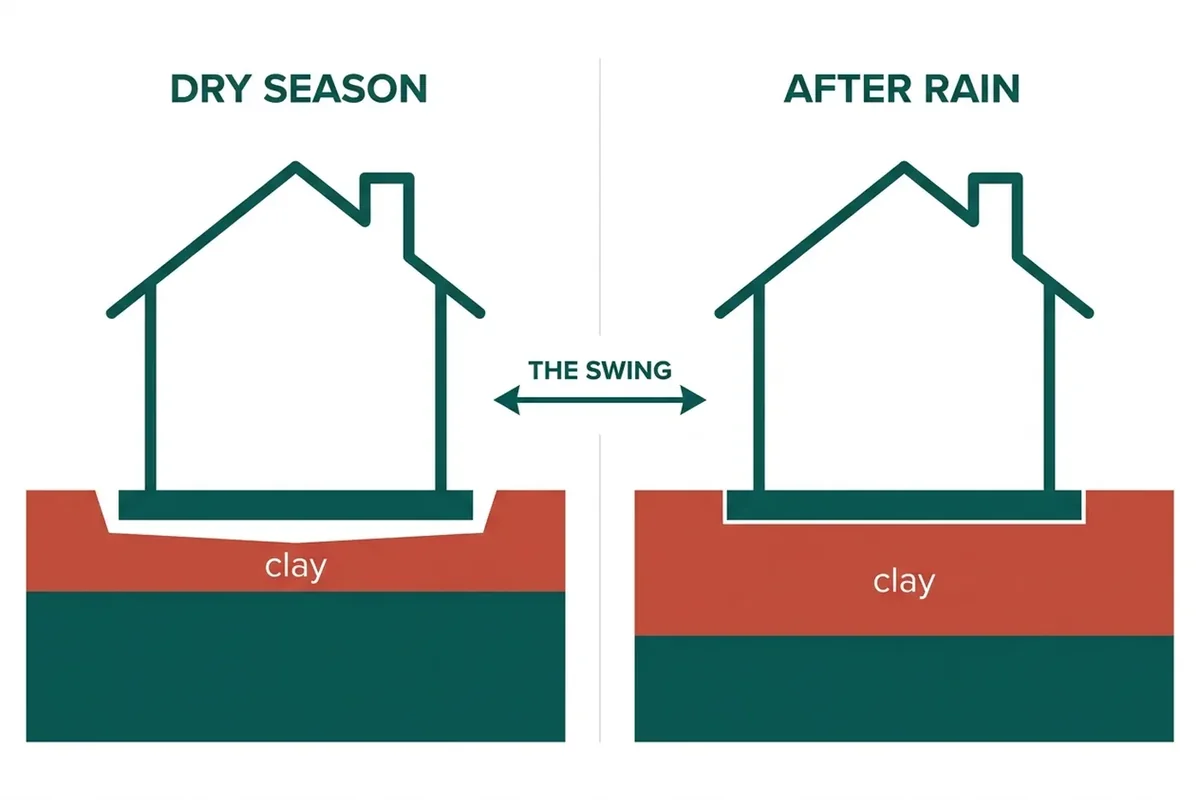
What it does not do is stop the soil changing shape. The clay beneath a post-tensioned slab in Nueces County shrinks and swells exactly as it would under a conventional one. The slab handles it better and moves more as a single unit, which alters the pattern of damage rather than the cause of it.
How to tell what you have
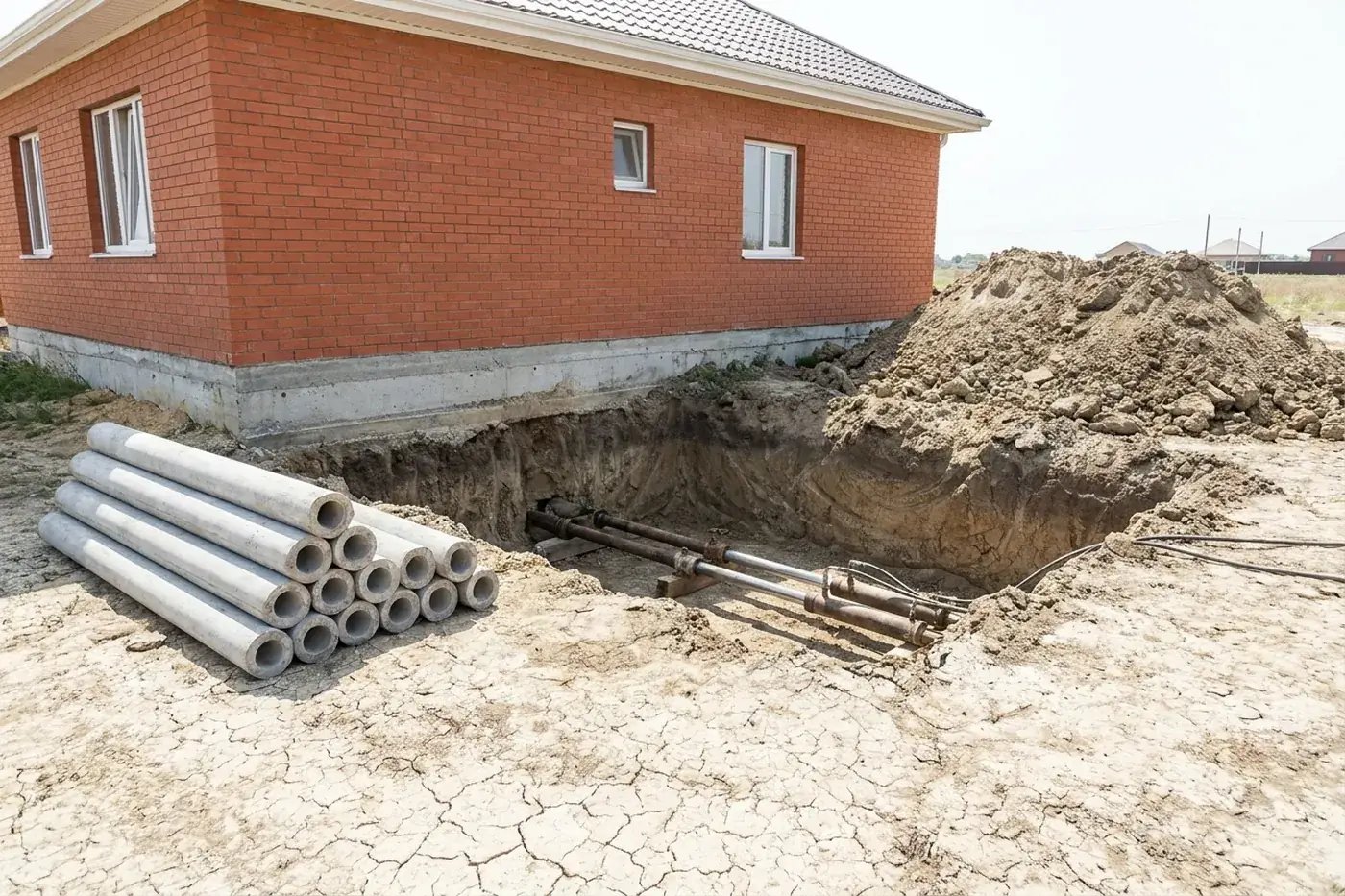
- A stamped or painted warning, commonly at the garage slab or on a nearby wall
- Small patched circles in a regular pattern around the slab perimeter — the anchor pockets, grouted over after tensioning
- The construction documents, which settle it outright
- The builder, on a newer house
- Where none of those is available, treat it as post-tensioned until established otherwise. That assumption costs a locating scan; the opposite assumption can cost a great deal more
What changes about the repair
| Work | On a conventional slab | On a post-tensioned slab |
|---|---|---|
| Exterior underpinning | Standard | Broadly the same — support is from beneath, nothing is cut |
| Coring for interior piers or plumbing access | Routine | Only after locating, and only where the steel is not |
| Saw cutting a trench | Routine | Avoided across banded runs. This is where multiple strands can be lost at once |
| Anchoring into the slab | Routine | Requires knowing what is below the anchor point |
| A severed tendon | Not applicable | Engineering matter. A good contractor stops and refers |
Locating comes first, always
Before any penetration, the tendon layout should be established by scanning rather than assumed from a drawing or a guess about typical spacing. Drawings are frequently unavailable and layouts vary between builders and plans.
A contractor who proposes to cut your slab without raising this has told you something useful about how they work. It is a fair question to put to anybody quoting the job, and the answer takes about ten seconds.
Where the contractor stops
A repair contractor is not a structural engineer. Assessing a damaged or severed tendon, specifying a repair to the tensioning system, or certifying the condition of a post-tensioned slab is engineering work, and a good specialist refers it rather than improvising around it.
What a foundation contractor does is support the structure from below, which on this ground is usually what is actually needed (see pressed pilings), and address the soil movement that is driving it via moisture stabilisation.
Post-tensioned slabs, answered plainly
What does post-tensioned slab repair cost?
Typically $3,500-$12,000, and locating tendons comes first at additional cost. The work is more constrained than on a conventional slab because where you can and cannot penetrate is decided by where the steel runs, not by where the damage is.
How do I know if my slab is post-tensioned?
There is often a stamped or painted warning at the garage slab or on a wall near it. Small patched circles in a regular pattern around the slab edge are the anchor pockets. Original construction documents settle it, and so does the builder if the house is newer.
Why is cutting one dangerous?
Because the strands are steel held under high tension. Cutting or coring into one without locating it first can release that tension suddenly. It is a safety matter before it is a structural one, which is why locating is not an optional extra.
Can post-tensioned slabs be piled?
Post-tensioned slabs can be piled. Underpinning supports the slab from beneath and does not require penetrating it, so the method is broadly available. What changes is any work involving cutting, coring or anchoring into the slab itself.
What if a tendon has already been cut?
That needs an engineer rather than a repair contractor's opinion, and a good specialist will say so. Assessing the consequence and specifying a remedy for a severed tendon is engineering work, outside what a repair contractor does.
Does a post-tensioned slab still move on this clay?
It does. Post-tensioning makes a slab far better at spanning and resisting cracking; it does not stop the ground beneath it shrinking and swelling. A stiffer slab moves more as a unit, which changes the crack pattern rather than removing the cause.
Book a Corpus Christi foundation assessment
Two things help most before the specialist gets there: roughly what year the house went up, and whether the trouble showed up during a dry spell or after heavy rain. On this ground the season it appeared in narrows the cause faster than the size of any crack does. You get a call back from a local specialist who serves Corpus Christi.