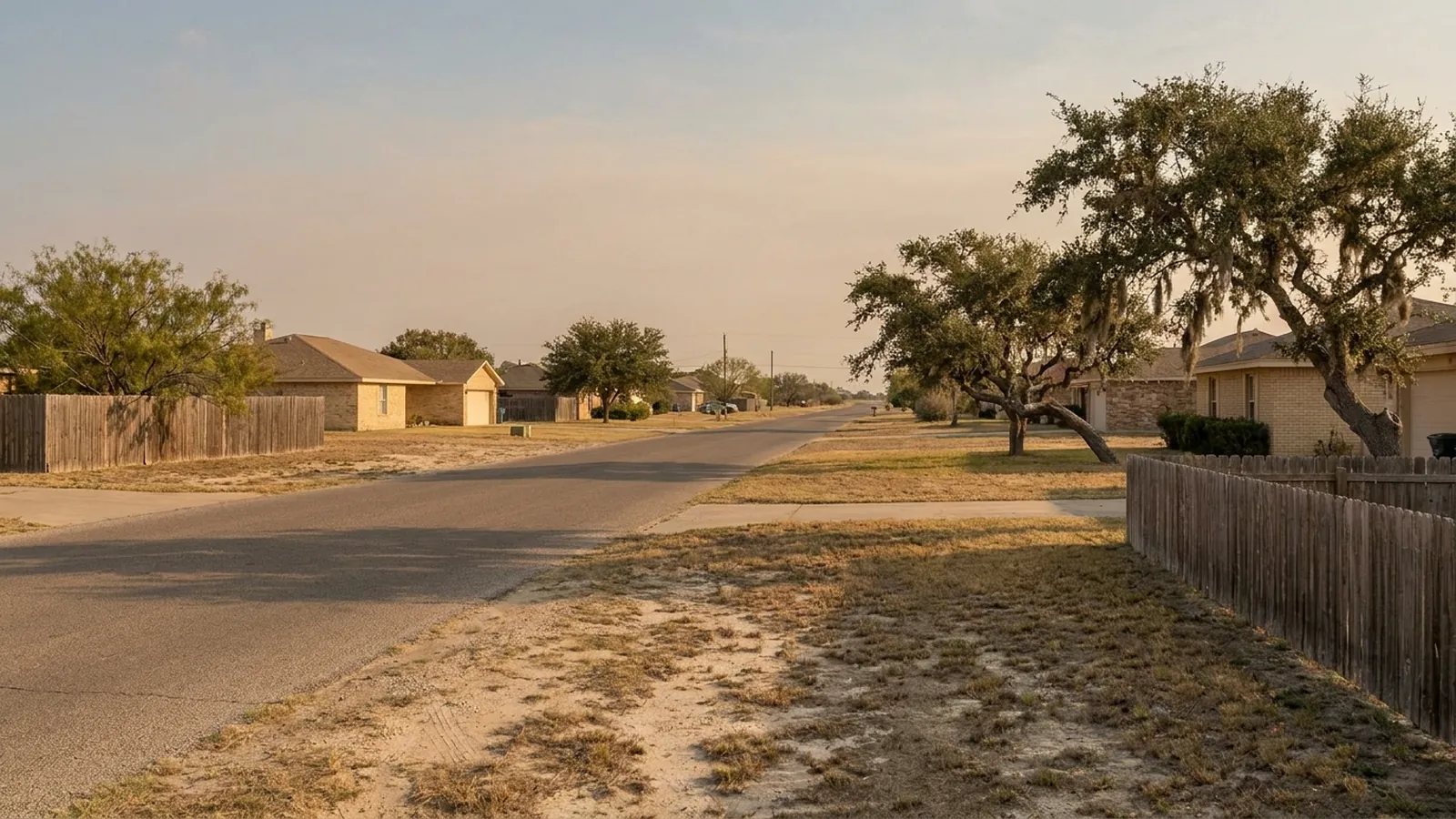
Prior foundation repair is common in Texas clay markets and is usually not a reason to walk away. What matters is the documentation and whether the warranty transfers — terms vary by company, and a warranty that ends at closing is worth nothing to a buyer.
What paperwork should exist, how to read a warranty before closing, and what a current survey can and cannot tell you.
Prior repair is normal here
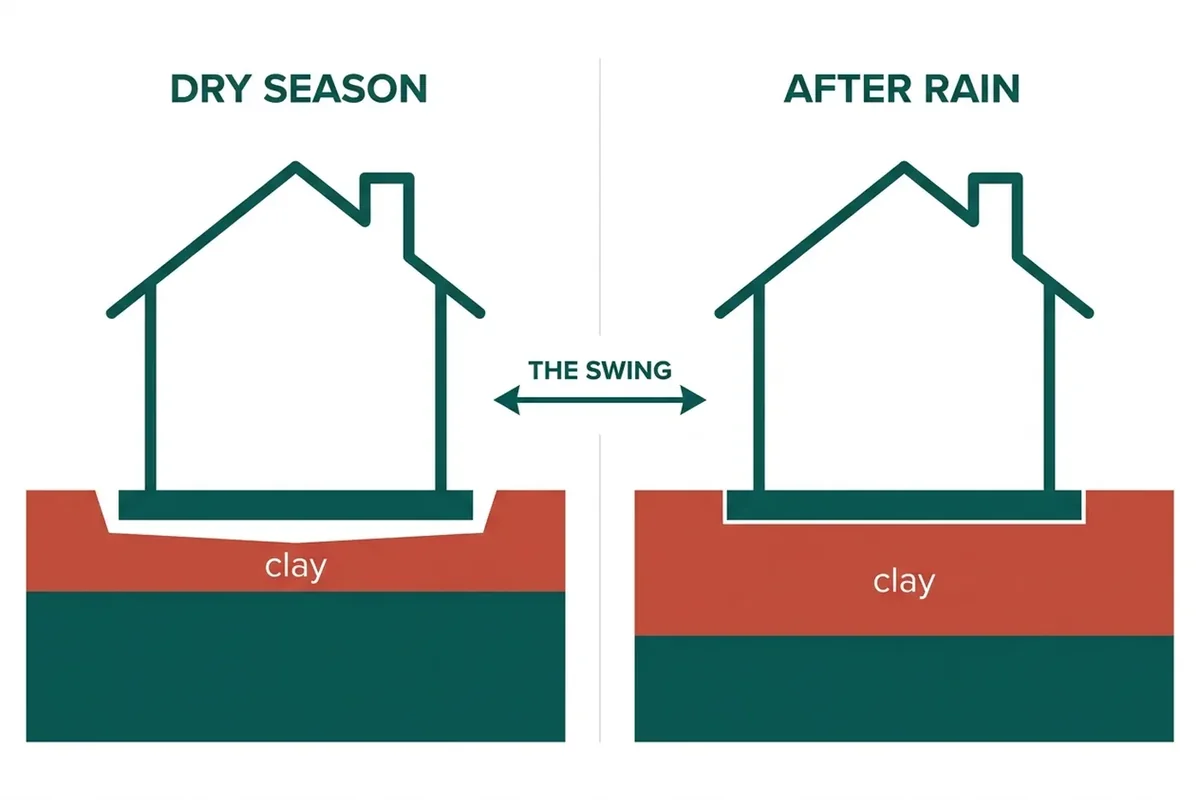
On soil with a linear extensibility up to 18.7 percent, receiving under 32 inches of rain a year, a meaningful share of older housing has had foundation work at some point. Treating that as disqualifying would rule out a large part of the market, and it is not what the condition warrants.
The more useful framing is that a documented repair on a house that has been stable since is a known quantity. An unrepaired house of the same age on the same clay is an unknown one. Neither is automatically better, but only one of them has evidence attached.
The paperwork that should exist
| Document | What it tells you |
|---|---|
| Original scope of work | What was actually done, and what was assumed |
| Piling log with depths and positions | Where the support is and how far it went — and lets anybody find it later |
| Floor elevations, before and after | The only objective record of what the work achieved |
| The warranty, in full | Duration, exclusions, and whether it survives the sale |
| Any engineer’s report | Independent view of why the work was specified |
Missing paperwork does not prove a bad repair. It does mean you are buying an undocumented condition, and that is a legitimate thing to reflect in what you offer.
Reading the warranty before you close
This is the part most buyers skip and it is the part with money in it. Three questions settle most of it.
Does it transfer? Some warranties transfer to a buyer automatically, some transfer once on payment of a fee, and some are personal to the original customer and simply end. That is a term of the individual document, not a standard.
What does it exclude? Frequently the interior slab, areas not underpinned, and movement attributed to plumbing leaks or drainage. Those exclusions can be reasonable and they define what you are actually protected against.
Who is behind it? A lifetime warranty is worth the remaining life of the company that wrote it. Whether that firm still trades under the same name is checkable in a few minutes and worth the few minutes.
What a survey now can tell you
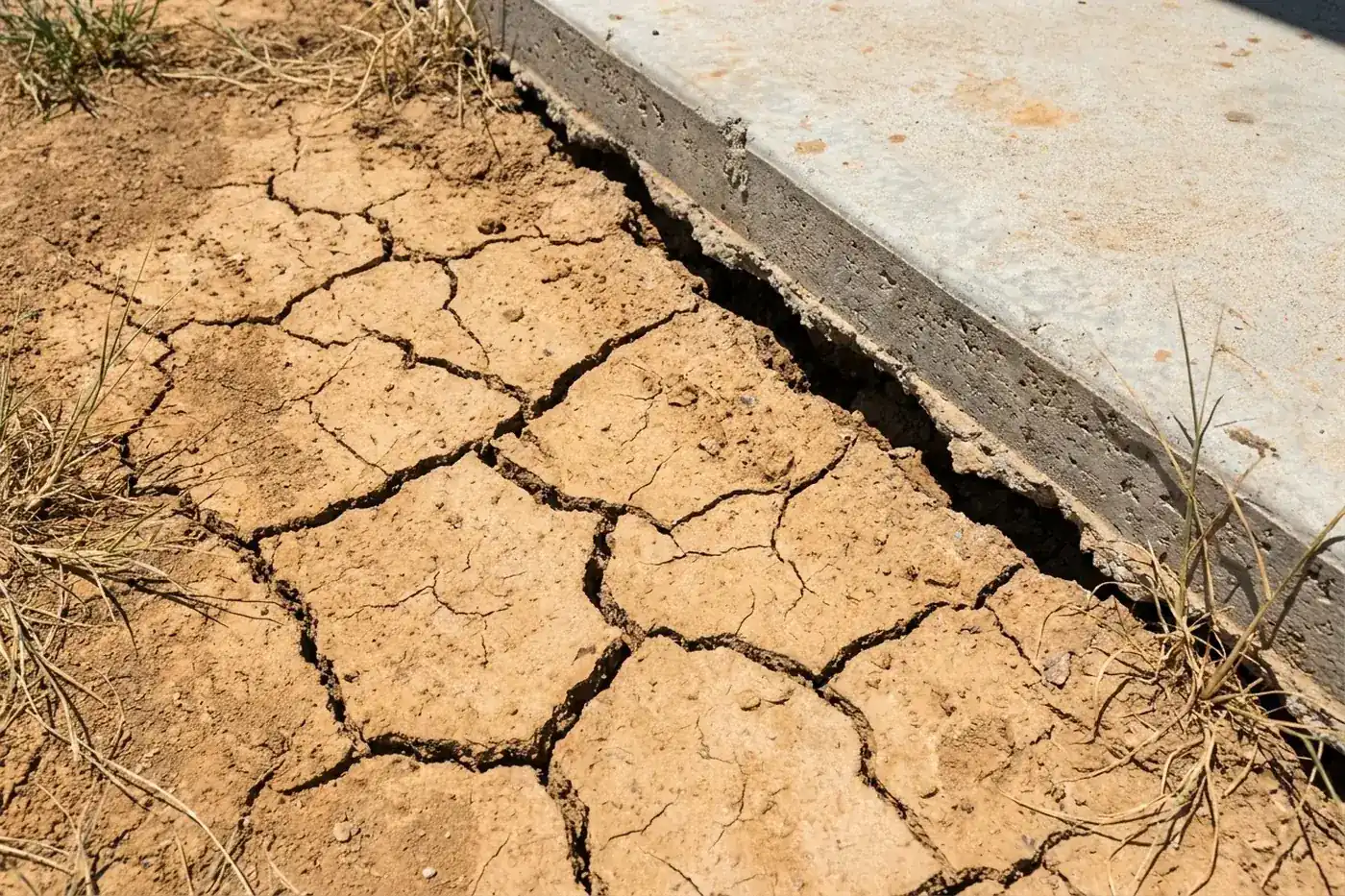
A contractor can measure current floor elevations across the whole footprint and describe the condition today. Where original elevations exist, comparing the two is the closest available answer to whether the repair held.
What no contractor can tell you from a single visit is whether movement is currently active. That takes two surveys separated by months, which a purchase timeline rarely allows — so for a transaction the honest position is a report of condition, not trend, and an independent engineer is worth considering for anything substantial.
See what the assessment covers, or how to check whoever did the original work.
Buying a repaired house, answered plainly
Should I walk away from a house with prior foundation repair?
Usually not. Prior repair is common in Texas clay markets and a properly done, well-documented job on a house that has since been stable is arguably a better proposition than an unrepaired house of the same age that has never been looked at.
What paperwork should exist?
The original scope, a piling log with depths and locations, before and after floor elevations, and the warranty with its transfer terms. A repair with no paperwork is not necessarily a bad repair, but it is an undocumented one and it should be priced that way.
Do foundation warranties transfer to a buyer?
Some do, some do not, and some transfer once for a fee. It is a term of the specific document rather than an industry standard, so read it. A warranty that dies at closing is worth nothing to you no matter what it says on the cover.
Can a contractor tell me if the previous repair worked?
They can measure the floor now and compare it to the original elevations if they exist. That comparison is the closest thing to an answer available. Without the original figures they can only tell you the current condition, which is still worth having.
Should I get an engineer instead?
For a purchase decision on a substantial house, an independent structural engineer is worth considering. They have no interest in selling repair, and their report is a document you can use in negotiation in a way a contractor's quote is not.
Does prior repair affect insurance?
It can affect what a policy will cover going forward, and disclosure requirements vary. That is a question for the insurer and your agent rather than for a repair contractor, and it is worth asking before closing rather than after.
Book a Corpus Christi foundation assessment
Two things help most before the specialist gets there: roughly what year the house went up, and whether the trouble showed up during a dry spell or after heavy rain. On this ground the season it appeared in narrows the cause faster than the size of any crack does. You get a call back from a local specialist who serves Corpus Christi.